Celestial Monitor: Moon, Planets & Tides
The Moon's phase, distance and tidal pull, planet positions and Earth from space — live from NASA SVS, EPIC and NOAA STAR.
WHAT IS THE MOON DOING RIGHT NOW? — REAL-TIME IMAGERY
NASA SVS Moon Phase Visualization🌙 Current Moon Phase & Orbital Data
NASA SVS
⚡ Gravitational Stress — What the Tides Do
The Moon and Sun measurably flex the solid Earth — ground tides move the crust tens of centimetres twice a day, strongest at perigee (closest lunar approach) and at full/new moon alignment (syzygy). This page shows those observed gravitational rhythms — scheduled astronomy and measured values only. It makes no claim about earthquakes and predicts nothing.
WHERE ARE THE PLANETS? — GRAVITATIONAL ANALYSIS
Conjunction & opposition tracking🪐 Solar System Gravitational Influence
CALCULATED| Planet | Distance (AU) | Angular Sep. | Status | Tidal Force (rel. Moon) |
|---|---|---|---|---|
| ☿ Mercury | 0.61 AU | 23° | — | 2.1×10⁻⁵ |
| ♀ Venus | 0.72 AU | 45° | — | 5.4×10⁻⁵ |
| ♂ Mars | 1.52 AU | 89° | — | 1.2×10⁻⁶ |
| ♃ Jupiter | 5.20 AU | 120° | — | 6.3×10⁻⁶ |
| ♄ Saturn | 9.58 AU | 67° | — | 2.1×10⁻⁷ |
WHAT DOES EARTH LOOK LIKE FROM SPACE? — LIVE IMAGERY
Full-disk Earth views from GOES & DSCOVR EPIC🌍 GOES-18 West (GeoColor)
LIVE
🌎 EPIC Earth (DSCOVR)
NASA
⚡ Hemispheric Power
NOAA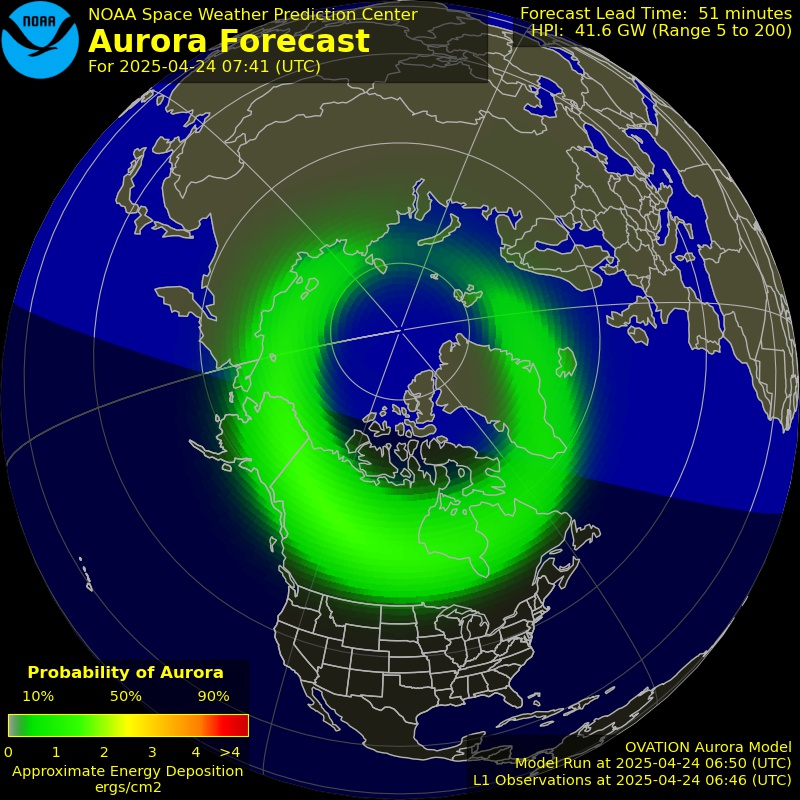
Where does this page's data come from?
- NASA Scientific Visualization Studio — Moon phase and orbital data
- NASA EPIC (DSCOVR) — full-disk Earth
- NOAA STAR — GOES satellite imagery
- NOAA SWPC — space weather: Kp index, X-ray flux, protons, solar wind
Every live panel on this page is observed measurement or published model output from these sources, reproduced as published.
The Whole Planet. $3.69 a Month.
One price. Every monitor, every feed, every tool. Founding member pricing — locked in for as long as you stay.
Get Full Access — $3.69/mo$3.69/mo locked for life — normal price $9.63/mo · Less than a cup of coffee · Cancel anytime
What do people ask about the Celestial Monitor?
What does the Celestial Monitor show?
Lunar phases, planetary alignments, gravitational stress analysis and tidal force calculations — observed data and scheduled astronomy. The Moon's phase and orbital data come from NASA's Scientific Visualization Studio, Earth's full disk from NASA EPIC, and live satellite imagery from NOAA STAR.
Do the Moon and Sun really move the ground?
Yes. The Moon and Sun measurably flex the solid Earth. Ground tides move the crust tens of centimetres twice a day, strongest at perigee and when the Sun, Moon and Earth line up at full or new moon, an alignment called syzygy. This page shows the combined pull live.
How is the planets' tidal force shown?
Each planet's tidal force is calculated as GM/r³ — its mass times the gravitational constant, divided by the cube of its distance — and shown relative to the Moon's influence. The cube makes distance matter far more than mass, which is why the Moon and Sun dominate Earth's tides.
Latest readings
Snapshot taken . The live panels on this page refresh in the browser.
- Next Moon phase
- Last Quarter on 2026-11-01 20:28 UTC
- ISS position (lat, lon)
- 6.4°, 171.8°